
Today we will talk about Elon Musk, a person who changed the thinking of an individual

Who is Elon Musk
Elon Reeve Mus (born june28,1971)is a South African-born American entrepreneur businessman who founded X.com in 1999(which later become PayPal), SpaceEx in 2002 and Tesla Motors in 2003.
Musk became a multimillionaire in his late 20s when he sold his start-up company, Zip2, to a division of Compaq Computers.
Elon Musk's Early Life
Elon Musk was born on June 28, 1971, in Pretoria, South Africa. His mother, Maye, was a Canadian-born model and dietician. His father, Errol, was an electromechanical engineer born in South Africa. A brother and sister joined the family soon after Elon was born.
Compared with his siblings, Elon was quiet. His mother would later say that his introversion, especially compared with his more outgoing siblings, made her fear that he might be deaf.
When Musk was 10, his parents divorced and Elon lived mostly with his father, who moved to South Africa. It was a difficult time, as Errol was reportedly tough with his children to the point of abuse, often lecturing Musk and his brother for hours.
Elon Musk's Education
After two years at Queen's University, Musk transferred to the University of Pennsylvania. He took on two majors, but his time there wasn’t all work and no play. With a fellow student, he bought a 10-bedroom fraternity house, which they used as an ad hoc nightclub.
Musk graduated with a Bachelor of Science in Physics, as well as a Bachelor of Arts in Economics from the Wharton School. The two majors speak to the direction Musk’s career would take later, but it was physics that made the deepest impression on his thinking.
Musk was 24 years old when he moved to California to pursue a Ph.D. in applied physics at Stanford University. With the internet exploding and Silicon Valley booming, Musk had entrepreneurial visions dancing in his head. He left the Ph.D. program after just two days.
When Elon Musk become "Rich"
Elon Musk's First Company "Zip2"
After dropping out of his Ph.D. program at Stanford, Musk and his brother Kimbal launched a software company in 1995 called Zip2, using $28,000 of their father's money and funds from angel investors. The Internet was beginning to expand by leaps and bounds, and newspapers were trying to figure out how they could make the best use of the new medium. The Musks’ company developed online city guides for newspaper publishers. Before long, Zip2 had won contracts with major players in the industry, including The New York Times and the Chicago Tribune.
But there was tension at Zip2. Musk wanted to be CEO, but the board stood firm against the move. In 1999, as the tech bubble was approaching its zenith, the board sold the company to Compaq for $307 million plus $34 million in stock options. In the sale, Elon Musk received 7% of the sale, $22 million.
PayPal' Rising
That same year, Musk co-founded X.com, an online banking company, using $10 million from the sale of Zip2. A year after that, with the dot-com bubble fully popped and a preponderance of tech companies closing their virtual doors, X.com would purchase Confinity, another online financial service firm, and its money-transfer service called PayPal.
It quickly became clear that PayPal was the most important element of the company. X.com focused on the service and renamed itself PayPal in 2001. It soon became the online-payment system of choice, with a few thousand users multiplying to more than 1 million in a few months. Its fast adoption has been credited to a marketing campaign that recruited new customers when they received money through the service.
Before the PayPal sale had closed, Musk had begun to dream up a miniature experimental greenhouse that he could land on Mars. The greenhouse, which he called "Mars Oasis," would contain crops and would, he hoped, rekindle faded public interest in space exploration.
Elon Musk In Space
Musk first launched the aerospace startup with $100 million of his own money in 2002 and didn’t successfully launch a rocket until six years in. Since then, SpaceX has sent multiple spaceships in the Earth’s orbit.
When the billionaire first founded his rocket-ship company SpaceX, he had no idea how it would make a profit selling products that have a high likelihood of exploding.
“I didn’t really have a business plan,” Musk said during a surprise appearance at the South by Southwest Film Festival in Austin this week. “I had a business plan way back in the Zip2 days, but these things are always wrong, so I just didn’t bother with a business plan after that.”
Despite his lack of foresight, Musk has built SpaceX into a multibillion-dollar company-worth close to $21 billion.
Elon Musk's Tesla Motors
Musk brought the same idealism and drive to another major venture, Tesla Motors Inc. (TSLA). That company was first incorporated in 2003 by Martin Eberhard and Marc Tarpenning, a pair of engineers. The two founded the company’s development until the Series A round of funding in 2004.
At that time, Musk came in as a leading investor, putting $7.5 million into the nascent car company. In addition to bringing his reputation and cash, Musk took an active role in the company, managing the design of the Tesla Roadster and insisting on a carbon fiber body, among other things. He continued to invest in the following years and took over as CEO of Tesla Motors in 2008. The company’s first car, the Tesla Roadster, sold 2,500 vehicles in 31 countries.
One issue electric cars face is a shortage of charging stations, especially when compared with the nationwide network of gas stations. In 2013, Musk said Tesla was investing in the creation of more charging stations on the East and West coasts. He also announced that Tesla Motors will allow other automobile manufacturers to use its technology patents to accelerate the development of electric cars worldwide.
For his work with Tesla, Musk earned a yearly salary of just a dollar (as of 2014), with other compensation in the form of stock and performance-related bonuses. As with SpaceX, though, Musk has insisted that Tesla is about more than just making money.
"Obviously Tesla is about helping solve the consumption of energy in a sustainable manner, but you need the production of energy in a sustainable manner," he said.
Elon Musk's SolarCity
To address the production side of the energy equation, Musk came up with the idea for SolarCity, which his cousins Lyndon and Peter Rive co-founded in 2006. The company designs, finances and installs solar panels. It also constructs electric-car charging stations in collaboration with Tesla Motors.
As of 2014, SolarCity had more than 6,000 employees. Musk has promised to build a SolarCity factory in Buffalo, New York, that would be three times the size of the largest solar plant in the United States. The company has grown to become the second-largest provider of solar power systems in the United States, and Musk is still the largest shareholder. In June of 2016, Tesla formally moved to acquire SolarCity.
Elon Musk's Vision of " Mars"
Elon Musk wants to take us to Mars, and he could do it. His company SpaceX is inching ever-closer to building a rocket large enough to take humans out to the moon, Mars, and beyond, with the Big Falcon Rocket’s first flight to Earth orbit expected in the next 3 to 5 years.
Musk claims that he wants to bring us out into the solar system for the good of humanity. A multi-planet species is a species that survives anything that threatens it, after all.
Musk believes he wants to make space open for all to travel there, but how he goes about that is just as important as his vision of the future that got him to this point.
Elon Musk has a plan, and it’s about as audacious as they come. Not content with living on our pale blue dot, Musk and his company SpaceX want to colonize Mars, fast. They say they’ll send a duo of supply ships to the red planet within five years. By 2024, they’re aiming to send the first humans. From there they have visions of building a spaceport, a city and, ultimately, a planet they’d like to “geoengineer” to be as welcoming as a second Earth.
If he succeeds, Musk could thoroughly transform our relationship with our solar system, inspiring a new generation of scientists and engineers along the way. But between here and success, Musk and SpaceX will need to traverse an unbelievably complex risk landscape.
Imagine there was once life on Mars, but in our haste to set up shop there, we obliterate any trace of its existence. Or imagine that harmful organisms exist on Mars and spacecraft inadvertently bring them back to Earth.
These are scenarios that keep astrobiologists and planetary protection specialists awake at night. They’ve led to unbelievably stringent international policies around what can and cannot be done on government-sponsored space missions.
Yet Musk’s plans threaten to throw the rule book on planetary protection out the window. As a private company SpaceX isn’t directly bound by international planetary protection policies. And while some governments could wrap the company up in space bureaucracy, they’ll find it hard to impose the same levels of hoop-jumping that NASA missions, for instance, currently need to navigate.
Musk’s long-term vision is to terraform Mars — reengineer our neighboring planet as “a nice place to be” — and allow humans to become a multi-planetary species. Sounds awesome — but not to everyone. I’d wager there will be some people sufficiently appalled by the idea that they decide to take illegal action to interfere with it.
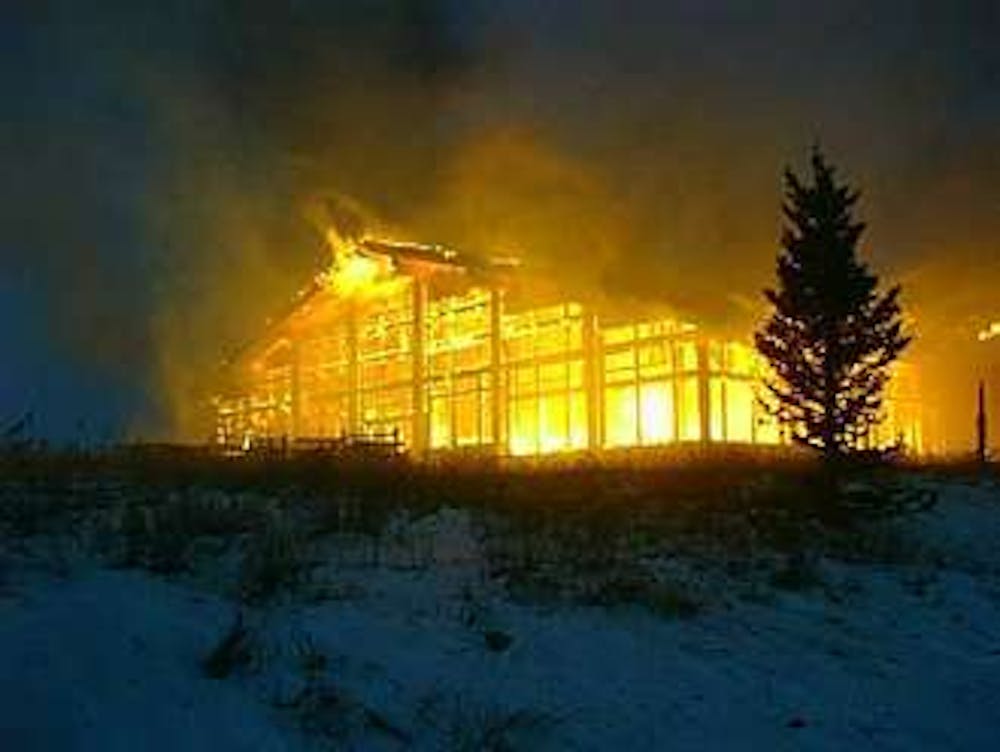
The mythology surrounding ecoterrorism makes it hard to pin down how much of it actually happens. But there certainly are individuals and groups like the Earth Liberation Front willing to flout the law in their quest to preserve pristine wildernesses. It’s a fair bet there will be people similarly willing to take extreme action to stop the pristine wilderness of Mars being desecrated by humans.
How this might play out is anyone’s guess, although science fiction novels like Kim Stanley Robinson’s “Mars Trilogy” give an interesting glimpse into what could transpire once we get there. More likely, SpaceX will need to be on the lookout for saboteurs crippling their operations before leaving Earth.